



Cortisol: getting to know public enemy number one.
By. Dr Amina Hersi (Women's health expert)
Somewhere along the way, cortisol became the internet’s most hated hormone.
Bloated? Cortisol.
Tired? Cortisol.
Can’t sleep? Cortisol.
Holding weight around your stomach? Definitely cortisol.
Scroll through wellness content for long enough and you would think cortisol is single-handedly destroying modern women’s health.
Many women with PMOS or PCOS already feel caught in between metabolic health advice, stress conversations and hormone misinformation online.
But perhaps it is time we got to know public enemy number one a little better.
Because cortisol is not evil.
It is not “toxic”.
And in many ways, it is simply your body trying to protect you.
What cortisol actually does
Cortisol is a hormone produced by the adrenal glands. It helps regulate:
-
energy
-
alertness
-
blood pressure
-
blood sugar
-
inflammation
-
the sleep-wake cycle
-
the body’s response to physical and emotional stress
Without cortisol, human beings would not function properly.
Cortisol naturally rises in the morning to help wake us up and gradually changes throughout the day.
In other words:
cortisol is not a design flaw.
It is part of how the body keeps you alive.

Cortisol is not the problem. Chronic stress is.
The body was designed to handle stress in short bursts.
Not endlessly.
But modern life often keeps the nervous system permanently stimulated:
poor sleep,
financial stress,
overworking,
under-eating,
social media,
notifications at midnight,
excess caffeine,
emotional pressure,
and never properly switching off.
The body responds to this exactly as it was designed to:
by activating stress pathways.
This is where wellness culture often gets things backwards.
Cortisol becomes the villain when really it may just be the messenger.

The nervous system conversation nobody is really having
Many women describe feeling:
“wired but tired”.
Exhausted physically, yet mentally unable to fully relax.
This is where the nervous system becomes important.
The autonomic nervous system helps regulate:
-
heart rate
-
digestion
-
sleep
-
alertness
-
breathing
-
blood pressure
-
the body’s shift between stress and rest states
We explored the relationship between women’s sleep, hormones and recovery further in our article “Your 8 hours is not his 8 hours: the science of women and sleep."
When the nervous system remains in a heightened state for long periods, many people begin noticing symptoms throughout the body:
poor sleep,
digestive changes,
palpitations,
muscle tension,
brain fog,
feeling emotionally “on edge”.
This is often where cortisol enters the conversation online.
But again, the body is usually responding to chronic stress exposure rather than randomly malfunctioning.

Stress and magnesium: the relationship people oversimplify
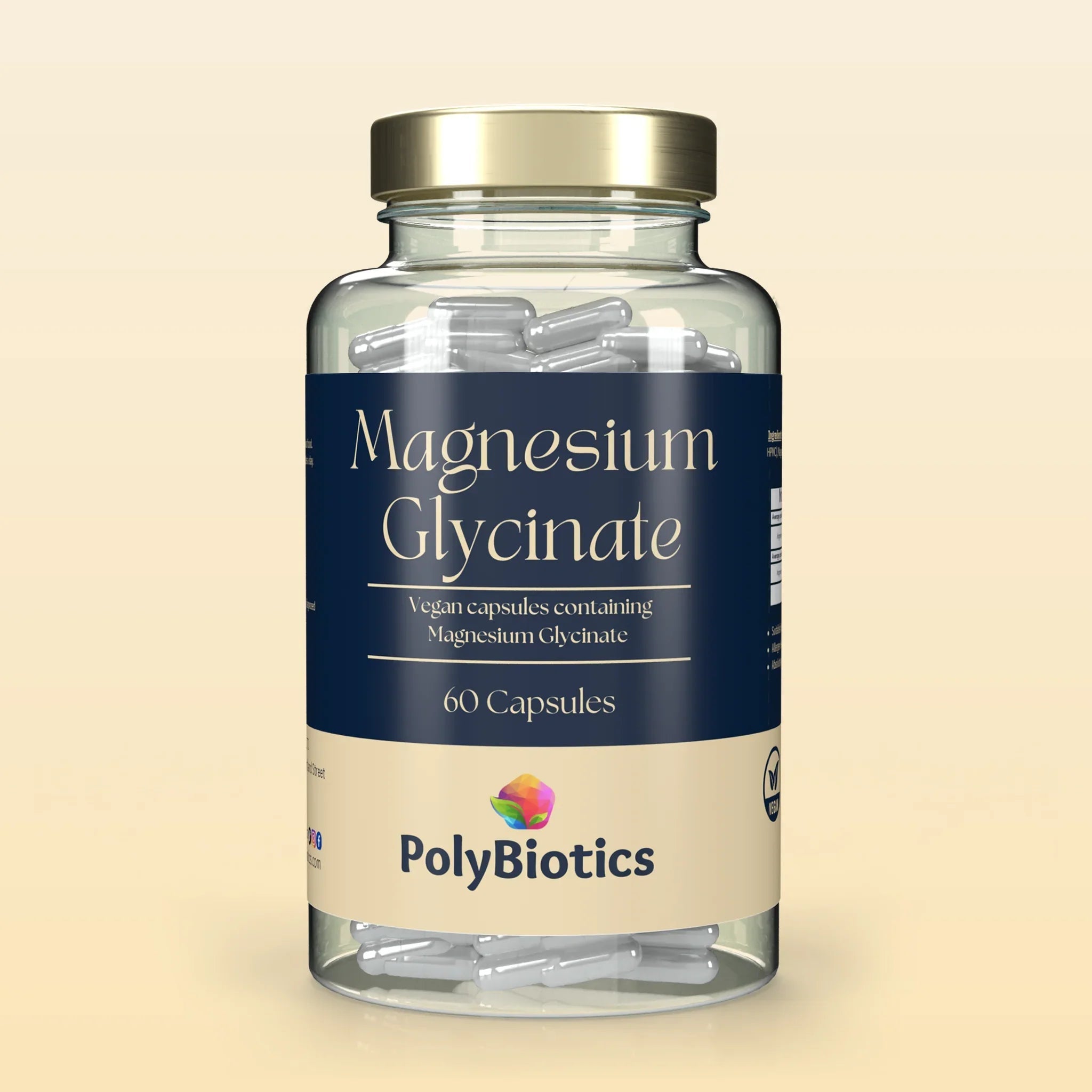
Magnesium has become one of the most talked-about nutrients in the wellness space, and not entirely without reason.
Magnesium contributes to normal nervous system function and normal psychological function.*
It is involved in hundreds of biochemical processes throughout the body, including nerve signalling and muscle function.
Chronic stress also appears to influence magnesium status. Stress may increase magnesium losses through the urine, while lower magnesium status itself may influence how the body responds to stress.
Researchers sometimes describe this as a bidirectional relationship:
stress may affect magnesium status, and magnesium status may influence stress responses.
This is likely one reason many women gravitate towards magnesium-containing foods or supplements during periods of stress or during the luteal phase of the menstrual cycle.
Those intense chocolate cravings before a period?
Dark chocolate is naturally rich in magnesium.
Sometimes the body is more intelligent than wellness culture gives it credit for.

The adaptogen boom: are we moving faster than the science?
Ashwagandha and rhodiola are now everywhere in the wellness space.
They are often grouped under the term “adaptogens”, a category of herbs claimed to help the body adapt to stress.
Search “cortisol” online and you will quickly find supplements promising to:
-
“lower cortisol”
-
“balance stress hormones”
-
“fix adrenal fatigue”
-
“reset your nervous system”
But the science is more complicated than marketing suggests.
Some studies have suggested ashwagandha may influence cortisol levels and stress perception in certain populations. Rhodiola has also been researched in areas such as fatigue and stress resilience.
However, there is still a significant gap in research when it comes to women’s hormonal health, particularly in premenopausal women.
This matters because premenopausal women do not exist in a hormonally static state.
Hormones fluctuate naturally across the menstrual cycle, and women with conditions such as PMOS/PCOS may already experience complex hormonal patterns involving insulin signalling, ovulation and androgen activity.
There are also emerging discussions around whether certain adaptogenic herbs may influence hormones such as testosterone or thyroid function in some individuals.
The reality is:
we do not yet fully understand the long-term hormonal implications of many of these ingredients specifically in premenopausal women.
And this is the uncomfortable conversation the wellness industry often skips.
Many supplements are heavily marketed towards women long before robust female-specific research exists.
Women’s health deserves better than:
“it worked in a stressed male population, so let’s market it to everyone.”

But supplements are not stress management
This is the part the supplement industry often struggles to say out loud.
Replacing nutrients depleted during chronic stress is not the same as resolving the stress itself.
A supplement cannot:
-
leave a toxic relationship
-
reduce financial pressure
-
fix burnout culture
-
create boundaries
-
get you off your phone at 1am
-
shorten your commute
-
remove modern life pressures
And yet wellness marketing often implies otherwise.
We are sold the idea that the body is malfunctioning, when in reality the body may simply be adapting to an environment it was never designed for.
Supplements can absolutely have a place.
But they should sit within a broader conversation around:
sleep,
nutrition,
stress reduction,
movement,
rest,
community,
therapy,
and lifestyle.
Not replace them.

What truly high cortisol actually looks like
One of the stranger parts of wellness culture is that many people discussing “high cortisol” online have never actually seen what pathological cortisol excess looks like medically.
True prolonged cortisol excess can occur in conditions such as Cushing’s syndrome.
This is a serious medical condition involving abnormally high cortisol levels, often caused by issues involving the adrenal glands, pituitary gland or steroid medication exposure.
Symptoms can include:
-
central weight gain
-
muscle weakness
-
purple stretch marks
-
thinning skin
-
easy bruising
-
high blood pressure
-
menstrual irregularities
-
osteoporosis
-
significant fatigue
This is very different from:
“I am stressed and bloated after sleeping five hours and drinking three iced coffees.”
The internet has blurred the line between endocrinology and wellness marketing.

And what low cortisol looks like
Low cortisol states can also be serious.
In Addison’s disease, the adrenal glands do not produce enough cortisol.
Symptoms may include:
-
profound fatigue
-
weight loss
-
low blood pressure
-
dizziness
-
nausea
-
abdominal pain
-
salt cravings
-
skin pigmentation changes
Again, this is not a trendy wellness talking point.
It is a genuine medical condition.
This matters because it reminds us of something important:
cortisol is necessary for human survival.
The goal is not to “eliminate” cortisol.
The goal is supporting a body that has been under too much stress for too long.

So perhaps cortisol deserves a better reputation
Cortisol is not your enemy.
It is not trying to sabotage your body.
In many cases, it is doing exactly what it was designed to do:
helping you survive stress.
The bigger conversation should not be:
“How do we destroy cortisol?”
It should be:
“Why are so many women living in ways that keep their nervous system permanently switched on?”
At PolyBiotics, we believe supplements should support the body, not shame it.
No fear-based hormone marketing.
No miracle “cortisol detoxes”.
No pretending a capsule can erase modern life.
Just more thoughtful conversations about women’s health, stress and what the body may actually be trying to tell us.
*Magnesium contributes to the normal functioning of the nervous system and normal psychological function.
Share:
0 comments
Blog posts
-

The Wellness Trends Women Should Question
Why some of today's biggest wellness trends are built on evidence that doesn't always reflect female physiology. By Dr. Amina Hersi MD Wellness trends have never been more popular. Open social media and you'll quickly be told that the healthiest...
-

Food vs supplements: this isn't a competition
Some brands compare their supplement's calories to breakfast, as if it's meant to replace food. It isn't. Here's what your diet gives you that no capsule can, and where the real gaps lie.
-

Is Stress Throwing Your Hormones Off? The Stressors We Don’t Always Think About
Stress isn't just about feeling overwhelmed. Heat, poor sleep, under-eating, over-exercising and major life changes can all place demands on the body. We explore how stress interacts with your hormones, what the science really says about childhood trauma and PCOS, and why building resilience, rather than trying to eliminate stress entirely, may be a more helpful approach.


